
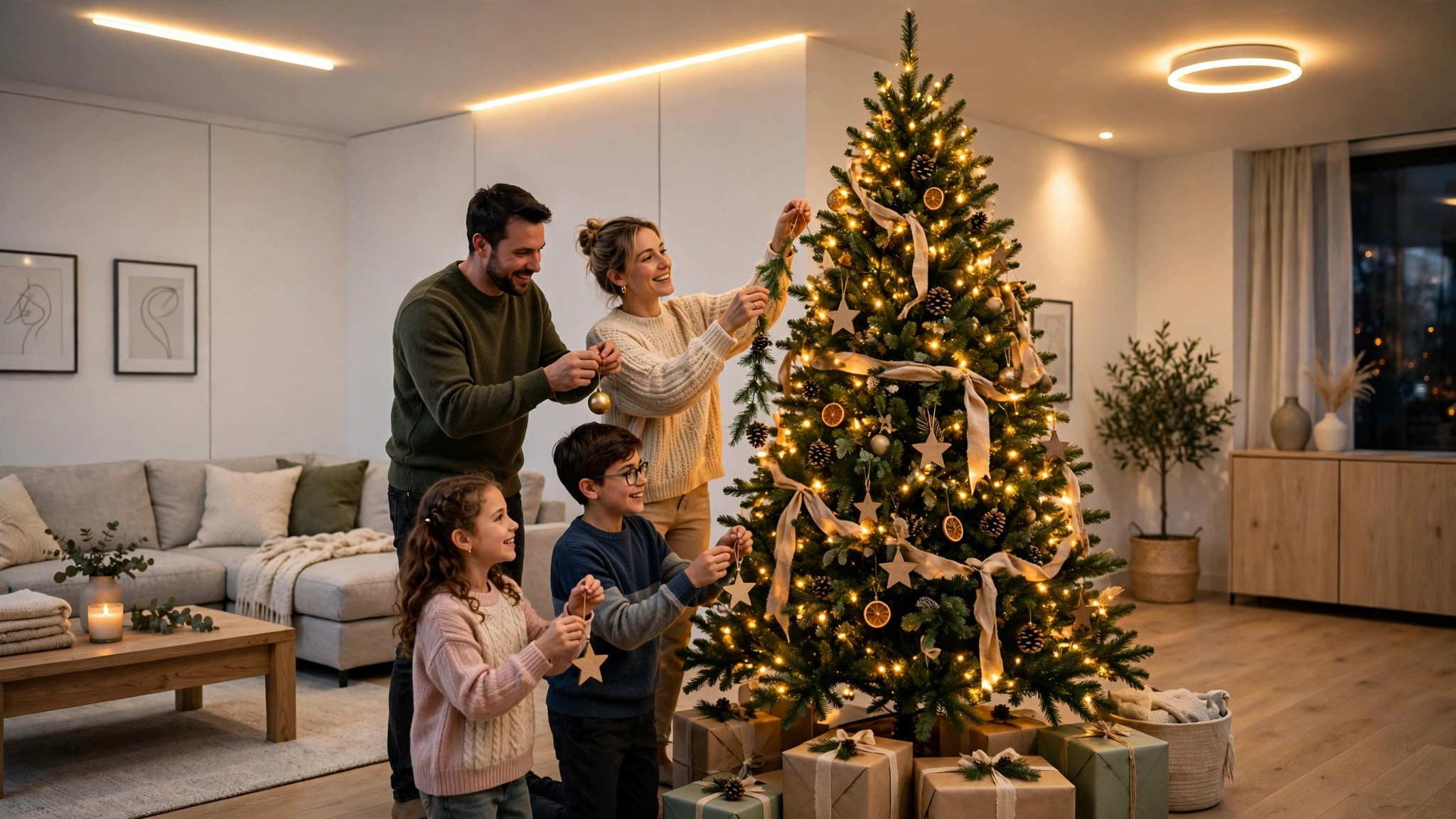
Eye & Spectrum
Easy on the eyes.
Honest about the light.
Four things make light comfortable — and we publish them for every product instead of hiding them in a datasheet.
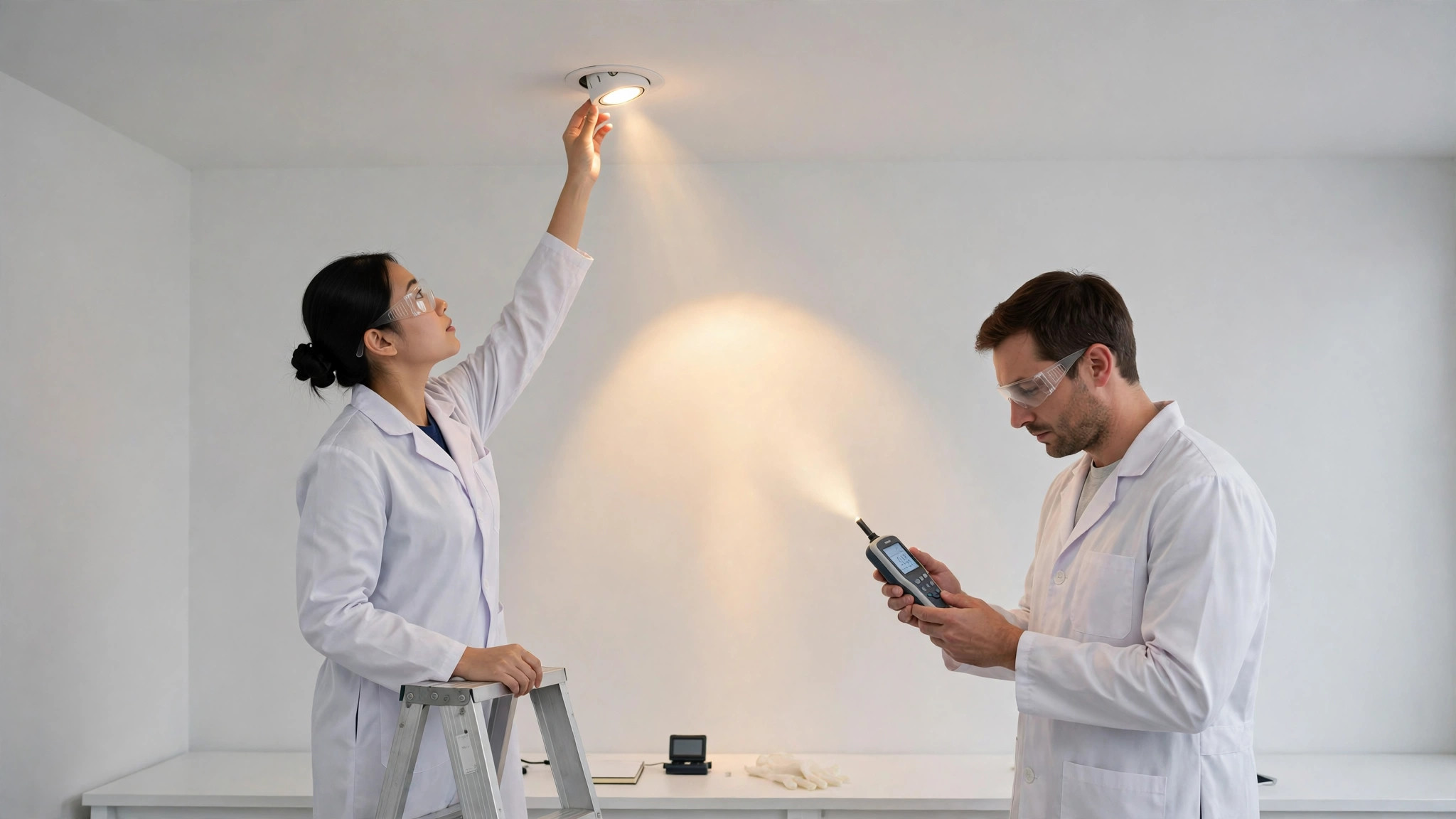
Flicker-free
Cheap drivers flicker hundreds of times a second. Ours use flicker-free drivers within the EU comfort limits (Pst LM ≤ 1.0, SVM ≤ 0.4) — no eye strain, no headaches, no strobing on camera.
Low glare
Opal diffusers and deep-baffled downlights spread the light instead of pointing a bare LED at your eyes. Look for UGR < 19 on our ceiling lights.
Blue-light aware
LEDs peak around 450 nm (blue). Warm white (2700–3000K) has far less blue content than cool white — better for evenings and bedrooms. All our products are IEC 62471 RG0/RG1 (exempt / low risk).
True colour (CRI)
CRI tells you how faithfully colours look under the light. Our main range is CRI 90+ — food, skin and wood look like themselves, not washed out.
The spectrum, side by side: 2700K vs 4000K vs 6000K
Same LED family, three colour temperatures. The warmer the light, the smaller the blue peak and the stronger the warm red end; the cooler the light, the bigger the blue peak and the flatter, bluer the balance. Illustrative curves — a supplier's measured spectral report (SPD) is the document that counts for a specific product.
| Colour temp | Spectrum character | Blue content | Best rooms |
|---|---|---|---|
| 2700K warm white | Strong warm reds, gentle blues | Low | Bedroom, living room |
| 3000K warm white | Balanced warm | Low–medium | Bedroom, living room, hallway |
| 4000K neutral white | Even across the spectrum | Medium | Kitchen, bathroom, office |
| 5000K daylight | Bright, blue-weighted | Medium–high | Garage, workshop |
| 6000–6500K cool daylight | Strongest blue peak | High | Workshop, task lighting — not bedrooms |
- Bedrooms: 2700–3000K, dimmable if you can — keep blue light low in the evening.
- Reading & homework: 4000K with CRI 90+ — crisp without being harsh.
- Kids' rooms: 3000K, flicker-free, and a low-glare diffuser — never a bare cool-white tube.